Travel throws geography at you in a rush: a coastline changes colour, a market square fills, a bus route reveals the shape of a valley. A camera catches the view, but it rarely catches the relationships between things — how the river bends around the hill, why the houses stop at the floodplain. A journal does. It slows you down enough to notice what is actually there, and to ask why. The pages that follow are not about producing tidy artwork or perfect prose. They are about building a practical record: sketch maps, field notes and ethical observations you can make on the move, with a pen that works and a few minutes to spare.
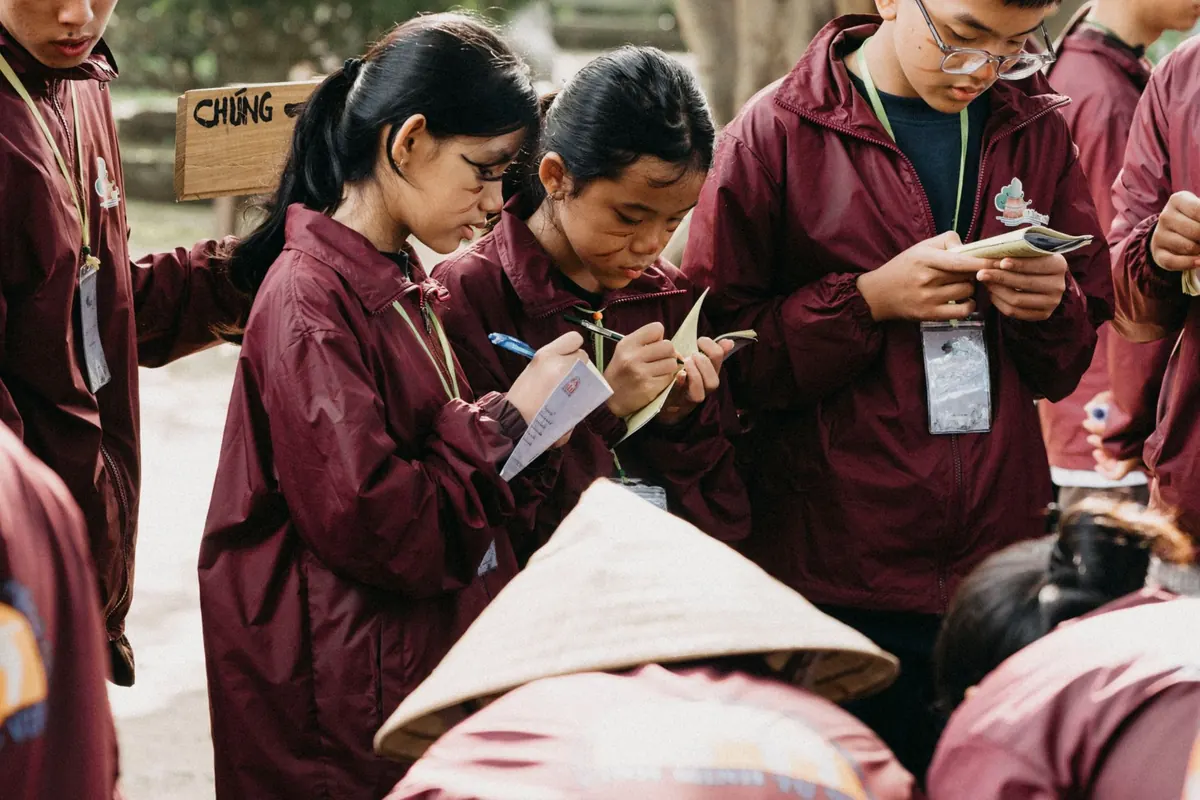
You do not need a leather-bound explorer’s log. A small notebook that fits in a jacket pocket will do more for your geography than a beautiful one left in a suitcase. The trick is to write in the moment, not to save it for the evening when the details have blurred.
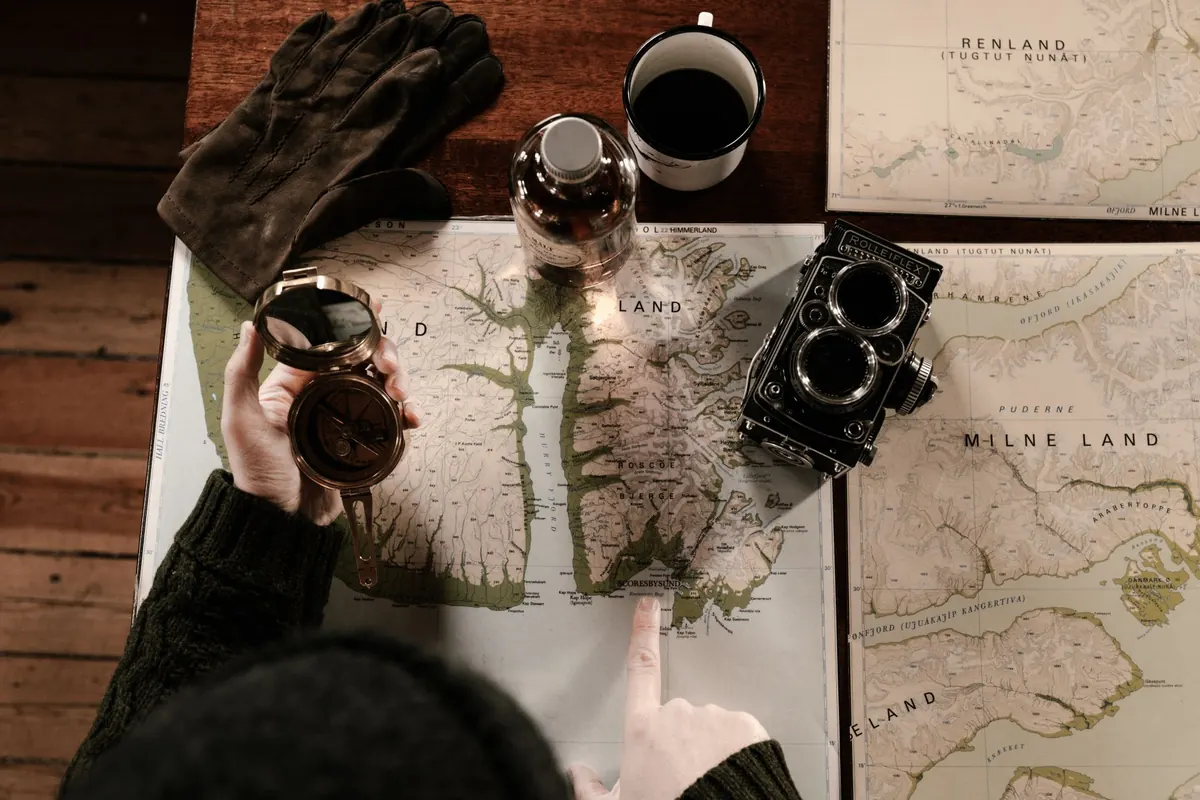
Carry a pencil and a waterproof pen. Pencil lets you sketch and erase; pen makes the final note permanent. Keep a phone for offline maps and a compass app, but do not let it replace the page. Drawing a line by hand forces you to decide what matters.
A minimal field kit:
Try a simple rhythm. In the morning, write three lines: where you are, what the weather is doing, what you expect to see. During the day, jot bullet points. In the evening, expand one observation into a paragraph. Ten minutes is enough.
A sketch map is not a survey. It is a diagram of relationships. Start with one line — a road, a river, a ridge — and build outwards. Mark three fixed points you can recognise: a church spire, a bridge, a distinctive tree. Then add the paths you have walked and the edges you have noticed.
Use symbols and arrows. A triangle for a peak, a blue squiggle for water, an arrow for the direction of flow or the movement of people. Shade land use: dense housing, open fields, woodland, industrial units. Write words directly on the map. “Market stalls every Tuesday” or “steep drop to the river” tells you more than a neat outline.
Do not worry about scale. The map is for your eyes, not for a planning office. If you return to the same place, draw it again. The differences between the two sketches will teach you more than a single perfect drawing.
Geography is not just what you see. It is what you hear, smell and feel underfoot. Note the specific. Not “a busy street” but “a delivery van idles outside the bakery; the driver shouts a greeting to the woman sweeping the step.” Not “a nice view” but “the light comes from the left, picking out the terracing on the far slope.”
Record time, weather and location at the top of every entry. Then write patterns. Who is here? Who is missing? Where do people gather? Where do they avoid? What has changed since yesterday? These questions turn a travel diary into a geography journal.
14:20. Riverside path. The water is high and brown. A man in a blue apron is fixing a mooring ring. Two swans ignore him. The opposite bank is all willow, no buildings. The path ends at a metal gate with a sign: ‘Private fishing’. The public right of way turns left, up a muddy slope.
That note captures water level, land use, a boundary, a human activity and a route. It took less than a minute to write.
You are a guest in someone else’s place. Observation is not a licence to treat people as exhibits. Ask before photographing anyone, and accept a refusal without argument. Respect private land, cultural sites and places of worship. If a location is sensitive — an informal settlement, a protest, a fragile habitat — think carefully about what you write and where you keep it.
Write about people as individuals, not as types. Avoid collecting personal details that could identify someone. A useful test: would you be comfortable if a stranger wrote the same note about you? If in doubt, leave it out.
Ethical prompts before you write:
For legal or privacy concerns in a specific country, seek local advice. The general rule is simple: observe with respect, and record only what you would be happy to explain.
You do not need a rigid format, but a consistent layout saves time and makes your notes easier to use later. Try a two-page spread. On the left, draw your sketch map. On the right, write field notes in bullet points. Use the margin for questions and follow-ups.
A simple page structure:
Number your pages and keep an index at the back. Use coloured tabs for themes: water, settlement, transport, land use. A colour code — blue for water, green for vegetation, red for human features — helps you read the page at a glance.
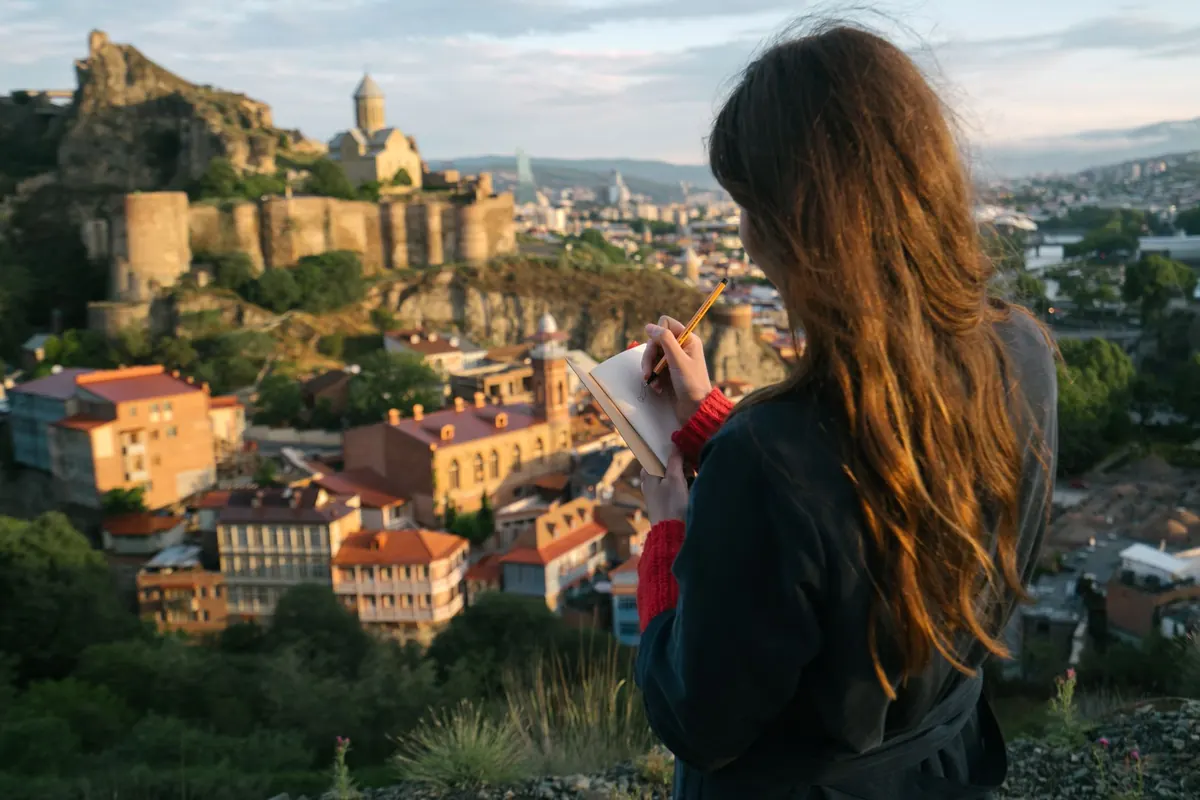
Sometimes the best geography comes from sitting still. Find a bench, a wall or a café window. Set a timer for twenty minutes. Write what changes and what stays the same.
Use these prompts:
One good observation is worth ten rushed ones. Slow down and let the place speak.
Keep the journal with you. Write badly if that is the only way to write at all. Date every entry. Do not wait for the perfect view or the perfect words. At the end of a trip, read back through your notes and draw one summary map from memory. You will be surprised by what you remember and what you forgot.
The journal is a tool for thinking, not a masterpiece. A few lines a day will build a record of how places work, how they change and how you moved through them. The best geography journal is the one you actually fill.
Photo: ArtHouse Studio / Pexels