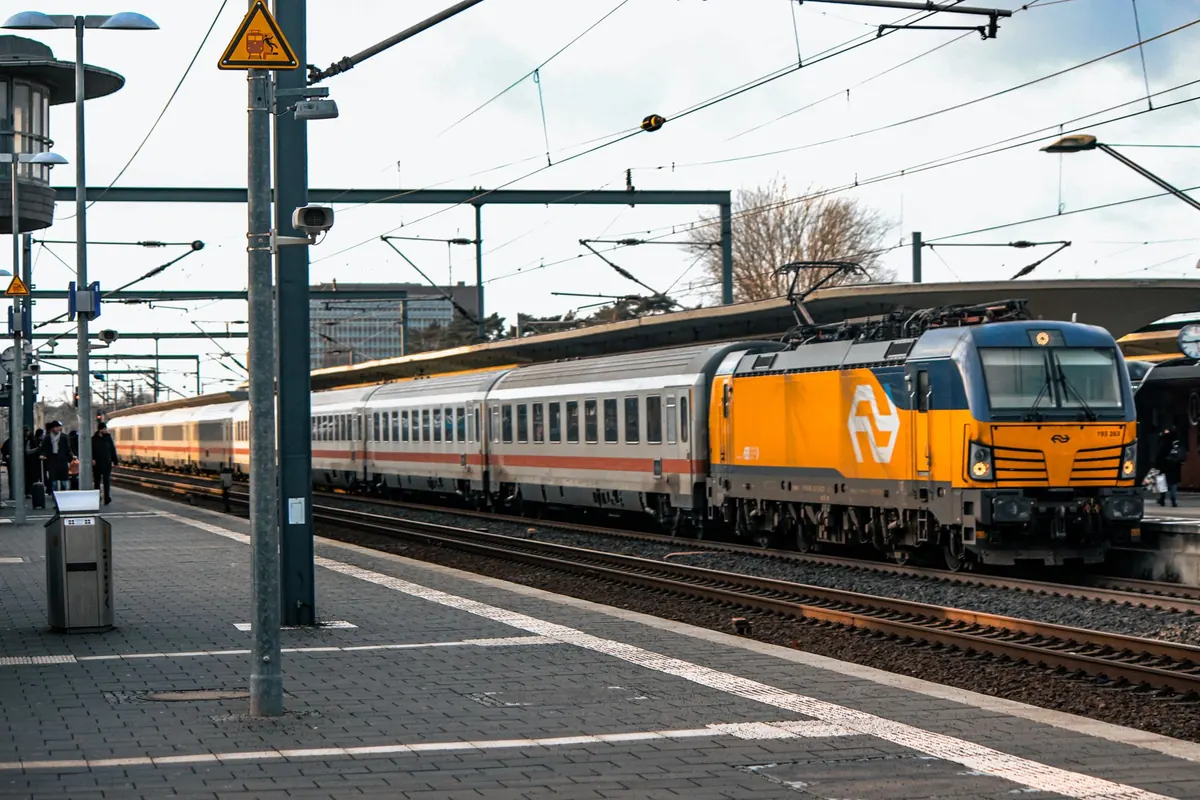
Two travellers cross Europe on much the same trains. One buys a pass, the other books individual tickets, and both come home certain they got the better deal. Both can be right. Whether a rail pass saves you money depends far less on the distance you cover than on how you travel: how many days you actually board a train, how many of those trains insist on a reservation, and what the point-to-point alternatives cost on the dates you want to go.
What a rail pass actually covers
A pass is a licence to travel within a defined area over a defined period, not a ticket for a specific train. The two big families are the Interrail Global Pass, sold to residents of Europe (including the UK), and the Eurail Global Pass, sold to visitors from elsewhere. Both come in two broad shapes: continuous passes, valid for travel every day inside a window, and flexi passes, which give you a set number of travel days to use within a longer window.
That distinction matters more than any headline price. A travel day is usually a calendar day on which you can take as many trains as you like, so two short hops on one day cost you one day. Many passes also count a direct night train boarded after about 19:00 as a single travel day, which can stretch a flexi pass further and save a hotel night at the same time. Single-country passes exist too, and they can be the smarter buy when your trip stays inside one border.
The three numbers that decide it
- Days against journeys. Count the days on which you will actually move. Five long journeys spread over three days use three travel days, not five.
- Reservation and supplement fees. These sit outside the pass and are the most common reason a pass disappoints. High-speed trains in France, Italy and Spain, international services such as Eurostar, and most sleeper berths all charge extra for passholders.
- Route length and the rival fares. A pass competes with whatever the operator would charge you instead. On a long, cross-border route booked late, that can be a very expensive flexible ticket. On a two-hour regional hop, it is often a few pounds.
Working through a comparison in five steps
The arithmetic is dull and takes about twenty minutes. Do it once and you will stop guessing.
- Write out every journey, with dates, route and operator. Note any overnight trains separately.
- Mark which services require a reservation and check the current fee for each. Add them up. This figure belongs on the pass side of the ledger, because passholders pay it on top.
- Price the same journeys as ordinary tickets twice: the cheapest advance fare available now, and the flexible walk-up fare. The gap between them is usually large.
- Price the pass that covers those travel days, including any youth or senior discount you qualify for, and add the reservation total from step two.
- Compare the totals, then adjust for side effects. A sleeper included in a pass saves a night's accommodation; a pass that forces expensive reservations may cost more than it looks.
Suppose a ten-day flexi pass comes to a round figure once discounts are applied. Add reservation fees for four high-speed legs and one sleeper berth, and the real cost rises noticeably. If the same five journeys booked in advance come to less, buy the tickets. If you are booking a fortnight before departure and the flexible fares are frightening, the pass usually wins. Use your own current figures rather than any example, since fares and pass prices change.
A pass is a discount on flexibility, not on distance. It rewards people who change their plans; it punishes people who book late and then sit still.
When point-to-point wins, and when a pass wins
Buy separate tickets if…
- You have two or three journeys in total, or a single return trip.
- Your itinerary is fixed and you can book advance fares weeks ahead.
- You are travelling mostly on regional trains within one country, where local tickets are cheap and easy.
- Most of your trains are the kind that charge passholders a hefty reservation.
Buy a pass if…
- You are crossing several countries, or covering long distances on a handful of days.
- Your plans are loose. The ability to decide this morning, on the platform, is the thing you are paying for.
- You will use night trains, which can replace both a travel day and a room.
- You qualify for a youth or senior rate, which shifts the balance quickly.
National and regional passes worth checking
Global passes are not the only option, and often not the best one. Switzerland's travel pass and half-fare card suit very different travellers: one if you will be on many trains and boats, the other if you mostly walk, cycle or take cable cars. Germany's monthly regional subscription covers slow trains nationwide and can undercut a global pass for a stay in one country. Regional day tickets in Germany, France and Italy are frequently excellent value for short hops.
If you are based in Britain, note that the BritRail pass is sold to visitors from overseas rather than UK residents, so domestic trips need a different approach — advance fares, split ticketing and a railcard usually do the work instead.
Before you buy: a five-minute check
- Read the conditions on the operator's own website, not a summary. Validity, qualifying residents and reservation rules change.
- Check passholder quotas for the specific trains you want. On busy summer high-speed services, reservation allocations can sell out even when seats remain for ordinary ticket holders.
- Confirm whether your first and last journeys in your own country are included, and whether they consume a travel day.
- Decide how you would cope with a missed connection. A pass that lets you simply take the next train is worth something; a cheap advance ticket that expires with the train is not.
- If your trip involves significant money, check the refund and exchange rules before paying, and consider travel insurance that covers disruption.
Do that, and the choice stops being a matter of instinct. Long, loose and cross-border: the pass usually earns its keep. Short, fixed and booked early: buy the tickets and pocket the difference.
Photo: Korkut Mamet / Pexels